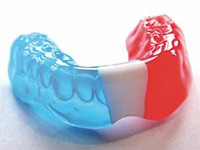
Mouthguards Print E-mail

At Fairview Park dental clinic we strongly advise wearing a custom fit mouthguard for children who play a sport or do an activity which may put them at risk of an injury to their teeth or mouth.

We believe so firmly in the importance of a custom fitted mouthguard that we are happy to offer mouthguards for all children (< 21 years Old) at cost.

mouth guard If you have private health insurance there is usually a rebate for mouthguards, variable according to which health insurer you are with.

Who should wear a mouthguard?

Anyone who participates in a sport that carries a risk of a knock to the face should wear a mouthguard. This includes sports where contact is part of the game like football, boxing and rugby, and also collision sports where contact often happens but it is not expected or allowed. These include basketball, hockey, water polo, lacrosse, netball, baseball, softball, squash, soccer, BMX bike riding, horse riding, skateboarding, in-line skating, trampolining, cricket (wicket keeping or batting without a helmet), water skiing and snow ski racing.

Why you need a mouthguard?

A mouthguard helps absorb the shock experienced by a blow to the face that might otherwise result in an injury to the mouth or jaw. A heavy collision can result in chipped or broken teeth, internal damage to a tooth, tooth loss, injuries to the soft tissue of the mouth, and, in severe cases, concussion or a broken jaw. Injuries like these can lead to long and potentially expensive treatment to restore the teeth and mouth back to normal function and appearance. According to Australian research, sports injuries account for about one-third of traumatic injuries to teeth. The Sports Medicine Association reports that 50% of children experience some form of dental injury. Statistics like these reinforce the importance of mouthguards, which typically cover the upper teeth, cushion a blow to the face, minimising the risk of broken teeth and injuries to the soft tissues of the mouth. They also help reduce the risk of jaw fractures and concussion.

How long will my mouthguard last?

A mouthguard should be reviewed every 12 months by your dentist to ensure it continues to fit correctly. A mouthguard may need to be replaced if major changes occur to the teeth like restorations or loss of teeth. Children’s mouthguards need to be changed more frequently as their mouth can change when they grow or when adult teeth push through.

Types of mouthguards

There are two specific types of mouthguards - the custom-fitted mouthguard and the ‘over-the-counter’ or ‘boil and bite’ mouthguard. The Australian Dental Association recommends that for proper protection, the custom-fitted mouthguard is essential. Custom-fitted mouthguards are made by your dentist and constructed directly from a mould taken of your teeth. The main advantage of custom fitting is that it allows the dentist to accurately assess your mouth and provide the optimum dimensions, coverage and thickness of the mouthguard for you. The dentist can also take a history of previous injuries and assess the type of mouthguard appropriate for your sport. These mouthguards are comfortable, allow you to talk easily and do not restrict breathing. Dentists recommend custom-fitted mouthguards as they offer the best protection and fit compared to a mouthguard you buy over the counter. The Australian Dental Association and Standards Australia do not recommend the over-the-counter or boil and bite mouthguards. They are usually poorly fitting and less comfortable to wear because they haven’t been specifically fitted to the shape of your mouth and teeth. This risks even greater damage to teeth. However, an over-the-counter mouthguard is far better than not wearing a mouthguard at all. If you do need to use an over-the-counter mouthguard, be sure to carefully follow the directions, otherwise you can end up with a poorly fitting mouthguard that offers inadequate protection.

 
site last updated 06 March 2012